Fear of Making the Wrong Choice: What’s Really Happening
Some people spend years quietly living with a constant, underlying fear:
What if I make the wrong choice?
The wrong relationship.
The wrong career move.
The wrong place to live.
The wrong timing.
The wrong life.
So they think harder.
Analyze longer.
Reopen decisions.
Search for certainty.
And over time, life starts feeling less lived — and more managed.
For some people, this looks like chronic overthinking.
For others, it looks like perfectionism, indecision, anxiety, emotional exhaustion, or constantly reopening the same questions.
Should I stay?
Should I leave?
What if I regret this?
What if there was a better option?
What if I’m getting my life wrong?
From the outside, this pattern can look very different depending on the person.
Some become highly productive.
Some avoid decisions altogether.
Some appear calm while quietly spiraling internally.
But underneath it is often the same thing:
A nervous system that never fully settles.
And eventually?
People become exhausted. Not because life is objectively falling apart.
But because internally, every choice quietly carries heavy emotional weight.
It rarely looks like anxiety from the outside.
Many people living in this pattern don’t think of themselves as anxious.
They think of themselves — and are often seen — as:
thoughtful
perceptive
intentional
self-aware
discerning
And often, they are. But beneath those strengths is usually a quieter, yet intense pressure:
A pressure to get life right.
To choose correctly.
To avoid mistakes.
To not waste time.
To not end up trapped inside the wrong life.
So the mind keeps working.
Scanning.
Evaluating.
Comparing.
Reopening decisions.
Searching for certainty.
Not because the person is dramatic or indecisive.
Because internally, uncertainty feels too emotionally uncomfortable.
What’s actually happening?
There isn’t one exact clinical label for this pattern.
It often lives at the intersection of:
anxiety
perfectionism
rumination
hypervigilance
over-responsibility
intolerance of uncertainty
But honestly?
The simplest way I know how to describe it is this:
The nervous system becomes organized around preventing regret.
The person is no longer simply living life. They are constantly trying to manage, predict, and emotionally secure themselves while inside of it.
The aim becomes:
If I think carefully enough, prepare enough, or choose perfectly enough, maybe I can prevent pain.
The problem is:
Life doesn’t actually work that way.
Truth be told:No amount of overthinking removes uncertainty from being human.
Why this happens
I don’t think there is one single explanation for this pattern.
I see it in people from loving homes.
Critical homes.
Achievement-oriented homes.
But there are often common threads.
Many people became highly attuned early in life.
They learned to notice.
To anticipate.
To think ahead.
To avoid mistakes.
To read the room.
Sometimes this develops from overt pressure.
Sometimes from subtle emotional dynamics.
Sometimes simply from temperament.
Over time, the nervous system quietly learns:
If I stay aware enough, prepared enough, or careful enough, maybe I can prevent future pain.
The intention makes sense. But eventually, the person becomes exhausted trying to emotionally secure themselves through decisions.
The hidden role of uncertainty
An important concept in mental health is something called intolerance of uncertainty.
Which essentially means:
The nervous system experiences unresolved situations as deeply uncomfortable. Emotionally difficult to tolerate.
So the mind starts trying to create certainty where certainty does not actually exist.
It predicts.
Compares.
Reviews.
Analyzes.
Keeps options open.
Searches for reassurance.
Because the person is trying to feel emotionally safe.
The problem?
Most of life cannot be fully resolved in advance.
What this actually feels like
People living in this pattern often describe:
Never fully landing.
Never fully relaxing.
Never fully feeling done.
Even after making a decision, the mind quietly reopens it.
Should I stay?
Should I leave?
Did I choose too quickly?
What if I regret this later?
The rumination can often feel falsely productive.
Insightful and necessary.
Like if you just think hard enough, clarity will finally arrive.
But most of the time, the mind is not actually solving the problem.
It is trying to relieve uncertainty.
That’s why changing the decision, canceling the plan, reopening the question, or seeking reassurance often creates temporary relief.
For a moment, the brain feels:
Okay. I’m safe again.
But the relief rarely lasts. Because the deeper issue was never the decision itself.
It was the fear of uncertainty underneath it.
Why relationships often feel especially hard
This pattern can create enormous suffering in relationships.
Because relationships require something many people with this pattern deeply struggle with:
Living without certainty.
No relationship comes with guarantees.
No partner arrives with proof.
No life path comes with confirmation that it was absolutely the right one.
So the mind keeps trying to solve something that cannot be fully solved.
Maybe there’s someone better.
Maybe I left too soon.
Maybe I stayed too long.
Maybe this isn’t right.
Years can quietly pass inside that internal reopening. Not because someone is incapable of love.
But because the nervous system keeps searching for a level of certainty that human relationships simply cannot provide.
Healing is not becoming certain
This is the part many people misunderstand.
Healing does not mean:
never doubting
always feeling sure
making perfect decisions
eliminating regret
finally solving your life
That’s impossible. Healing is becoming more capable of staying emotionally grounded even when life feels unresolved.
It is learning that uncertainty is uncomfortable — but survivable.
It is learning that imperfection does not equal failure.
And slowly realizing:
You do not need total certainty to move forward.
So what actually helps?
Usually not more analyzing. Often way less.
Healing begins when people start noticing the loop itself.
The compulsive reopening.
The constant evaluating.
The endless search for reassurance.
From there, the work becomes much more practical and much more human.
Interrupting the loops.
Learning to pause before reacting.
Allowing discomfort without immediately trying to fix it.
Practicing “good enough.”
Reducing reassurance-seeking.
Making decisions without demanding complete certainty first.
And maybe most importantly:
Grieving the fantasy that there is one perfect version of life we are supposed to find.
Because a lot of people are secretly trying to solve an impossible equation:
How do I make sure I never regret my life?
But no amount of overthinking can solve that.
Every life contains uncertainty.
Every choice closes other doors.
Every path includes loss.
That is not failure.
That is being human my friend.
Final thought
If you recognize yourself in this pattern, you are not alone.
Many people are quietly living inside this exact cycle — including people who appear highly capable on the outside.
The goal is not to become someone who never doubts.
The goal is to stop organizing and managing your entire life around the prevention of regret.
Because peace does not come from finally becoming certain.
It comes from learning how to live — imperfectly, openly, and presently — inside an uncertain life.
If this resonates with you:
I recently released UNSTUCK — an ebook exploring how to move forward. (The sequel to my free ebook, STUCK.)
Explore Unstuck →Here
New here? Join the IAMWELL Newsletter + receive STUCK, my free ebook.
Let’s stay connected. You can find me on Instagram at @IAMKIMEGEL
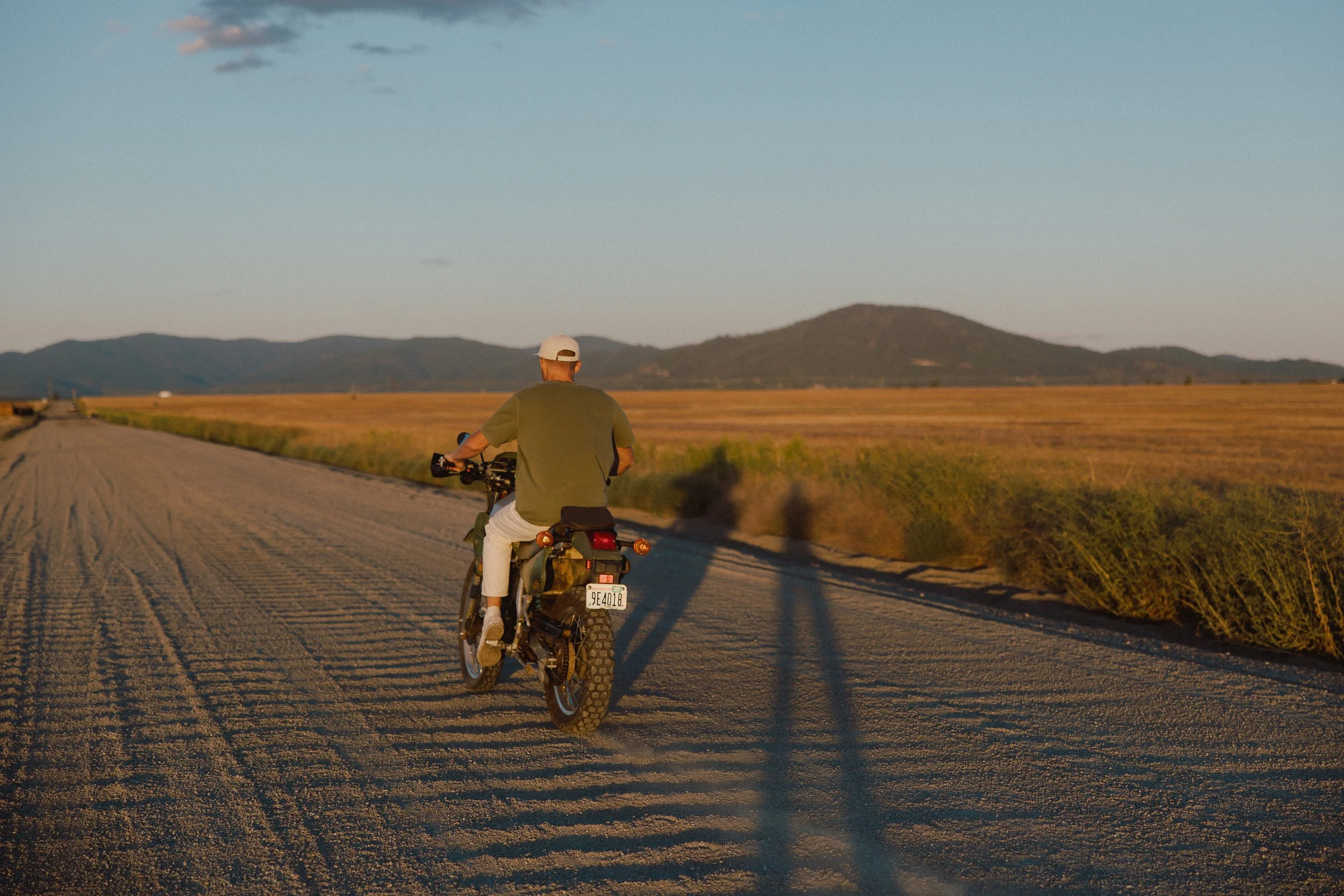
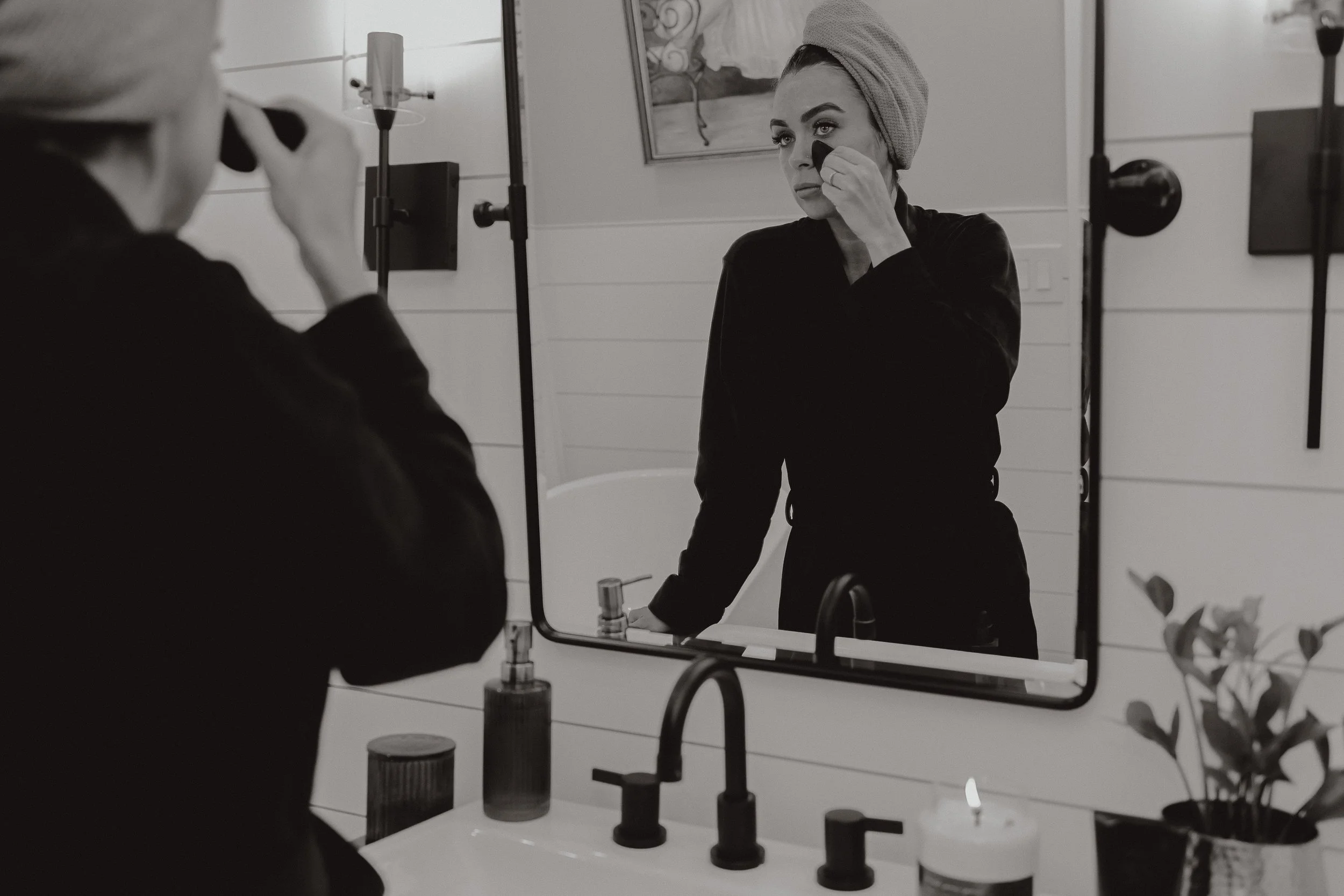
*Post image by visual artist Amy Lynn.




















5 Tips (How to Make Better Life Choices)

Decisions, decisions. They can be so hard. I mean, which decision is "right?!"
What choice is best for me? What choice is going to be best for everyone involved? Is this choice bad? Is this choice "wrong?" Is this choice selfish? Seriously, it can be so confusing and overwhelming, especially when our decisions involve big change and impact other people.
The reality is that being human requires us to make decisions. Making no decision is a decision. I've been at points of my life where I've completely stalled because I didn't know what "the right thing to do" was. (I'm sure you can relate.) Taking time to think things through is one thing, although sitting in the grey for too long can create it's own set of issues. There's no escaping making decisions for our lives, so here are some thoughts on how to feel more confident about the decisions that are currently requesting your attention.
1. Consider the Opinion of a Legit Source
When you're on the fence about a choice, it can be beneficial to turn to a legit source who has knowing and opinions that you value. When you're contemplating a decision and someone that you respect has relevant experiences to share, keep your ears open. Want to be a doctor? Talk to a practicing physician that you enjoy who has concrete advice. Want to travel somewhere interesting? Seek out conversations with like minded adventurers who travel to destinations that excite you. Be mindful that these are outside opinions, however, when opinions come from a trusted and valued source, I considered that to be GOLD.
2. Tap Into Your Core Values
What you value acts as a compass toward making decisions that align with who you are and what you stand for. Think of each of your core values as guiding lights; lighting the path before you in the direction that's uniquely "right" for you. When you're clear about what's important to you, you'll make decisions with more ease.
Defining core values helps you get in tune with who you are and what you enjoy. Be aware that your preferences will change as you continue to grow and expand. What you once enjoyed can change over time. Sometimes it's just a habit that keeps us doing what we have always done, whether we still gain pleasure from it or not. With that said, it can be beneficial to check in with who and where you are in your life now in order to make more updated choices that honor the present you.
3. Sit on It
Some decisions require you to take a step back and get quiet in order to listen for what the right thing to do is. Allow yourself time to sit with your choices. Be mindful of external forces pushing you to make a decision before you're ready to make one. I understand that some decisions do have and need a timeline, but make sure you have some empty space so you can hear yourself without interference from the outside.
4. Feel it Out
Feel about the decisions that lay before you. That might sound weird, let me further explain.
How you feel about your life and the experiences, opportunities and people in it is huge. Sometimes you can't sum up how you feel in words, although how you feel about something never fails. The tricky part is matching how you feel with what you decide to do. It's like the feeling that surfaces when you're literally walking in the wrong direction, it just doesn't feel right. Get to know that feeling so you can identify it and act on it.
“At the end of the day people won’t remember what you said or did, they will remember how you made them feel.”
How can you make good decisions if you're not aware of how you feel? By slowing down and checking in more frequently with yourself you can, overtime, become more in tune with how you feel about things vs. how you think about things. This will help you make better choices.
5. Take the Pressure Off
A quote that I always think about when I make major choices in my life is a John Burroughs quote, "Leap and the net will appear." Meaning, make a move and something will come in to support you and help direct you further. This really is how it works in life.
This quote helps me "dumb down" decision making. It takes my view on choices from a level 9 to a level 3 in scary factor. It helps me remember that the chances of me ruining my life in a single choice is a pretty extreme perspective that's going to keep me in fear and stagnant, which is scary in itself.
Take a breath, get grounded and make the best decision that you know to make in the moment that an answer is being requested. That's the best any of us can do.
Many decisions, especially major ones, come into existence because of the small choices that we're making along the way. For example, usually multiple different choices and events lead to the decision to either leave or stay in a established relationship. It's more rare to have one single event happen that changes everything.
Also, remember that most everything is temporary in life. We're going to make decisions that lead to something we don't necessarily want or like, that's part of living. However, perhaps we have to go down those mirky roads in order to get to an elevated place within ourselves and our lives. Trust this.
Hopefully, these tips spoke to you and can help you navigate your way with more confidence. Trust that when you make a move, something or someone other than you will swoop in to support you or help you get clear on which direction to go in. Although, you have to start down the path by making a choice, which will then set the flow of life in motion. Trust that the flow of life will help you navigate your way from there.
Now, get after it and make a move.....
* The above image was taken by photographer, Renata Amazonas.
Controlled Action vs. Inspired Action (What's the Difference?)

Life often calls for us to make choices and take action. Both controlled and inspired action are two approaches to life’s challenges that can either help us flow or add more struggle then need be. They are both necessary and can produce desired results when applied to situations that compliment them. Learning about these two approaches and knowing which one to grab onto in specific circumstances of our lives can help us cruise through life more fluidly.
Inspired Action
Inspired action is commonly driven by a random thought, curiosity or inspiration to act. The energy behind inspired action tends to be free flowing, light, organic and open. The driving force behind this action is curiosity and intrigue. There is no force or resistance when our action is coming from an inspired place.
“The end result of inspired action is not the focus; the joy we feel the action will bring is.”
Inspired action doesn’t require a plan. It requires us to get out of our own heads. There are no rules or “should’s” to follow. There is no right, wrong or logical mindset at play. It’s not to be contained or controlled, which is what allows it to happen so naturally and be so organic. Simply put, it’s action that we just feel moved to do when it calls.
This action is not ego based, rather it’s based on what makes you feel alive and joyful. It often happens unexpectedly, like most special moments in life. It’s without a script or knowing. It’s just, straight up, Inspired.
When action comes from a place of inspiration the result of that action tends to be extremely powerful. Endless possibilities and big dreams stem from this type of action because it’s pure, true and genuine. It has no limits or boundaries.
Inspired action is based around the concept of flow. Flow is not questioning where you’re going nor where you’ve been.
It’s just………Being. In. The. Flow.
Controlled Action
Controlled action has a very different energy to it. The energy that accompanies controlled action is focused, contained and more contrived. This type of action calls our logical minds and learned perspectives to “figure out” what we need to do in order to make our desired result happen. This way guides us to focus on “the how” a desired result can be approached. It's more systemic and procedural. In controlled action there's often a “step by step” approach that leads to the desired result.
Controlled action is great when you’re looking to complete the academic path toward becoming a doctor, lawyer or any other profession that has a specific criteria to follow to meet the end goal. Flying a plane, getting a black belt in martial arts, doing a math problem, putting a piece of IKEA furniture together and a lot of technical fields require this approach. It's necessary at times. (I know, random selection of events, no doubt.)
Here is where we get to make a choice……
If we apply the concept of controlled action to a challenge in life that calls for a loose and flexible approach, we can very much get in our own way. Fighting against what is will bring more suffering and struggle than need be. So, when we're 100% committed toward using a fixed approach to a topic that calls for space, freedom and no boundaries, chances are that we will be creating resistance and more struggle than necessary. Resisting is the more difficult way. For example, forcing any sort of relationship to BE a certain way or demanding that something NEEDS to happen in order to feel okay are situations that cannot be controlled. Who you naturally connect with and feel attraction toward just is. There are some things in life that cannot be forced.
I know this gets tricky when we REALLY want something to look a certain way or someone to feel a certain way about us. It can be crazy making. It’s easy to want to follow a step by step plan of how to make something we want happen or someone we desire to see us in a certain light. The reality is, when we use force when something calls for space, we often create an opposite outcome to what we desire.
I know that when I get uncomfortable or anxious in life, I have a tendency to up the volume of control. There’s this illusion that if I control what I can, I will feel better. Often this is why we can find ourselves running around “busy” all the time. It distracts us and keeps us in the doing mode, which gives us a temporary sense of relief. Distraction may mask our anxiety and fear, although it doesn’t deal with it. Dealing with those emotions and getting through them requires facing and sitting with them. I understand why we humans avoid, it’s our best attempt of self protection from pain and discomfort. The quick fix is to stay busy, but the way toward healing is to slow down and practice the concepts of letting go, relaxing, trusting, calming and accepting. *Believe me, I know that's easier said than done my friend.
With that said, there is a time and place for controlled action, as there is a time to let go, allow, trust and go with what’s happening because you're inspired. Hopefully having more knowing around these two sources of action can help you find more self awareness and peace in your choice of action.
* The above image was taken by Amy Bjornson, San Diego based photographer.