Why You Feel Stuck Even When You're Doing Everything Right
You're responsible.
You think before you act.
You show up for people.
You work hard. You try to make good decisions.
You're dependable, thoughtful, and often the one others count on.
From the outside, your life may even look like it's moving forward.
So why does it sometimes feel like you're doing everything right and still not getting anywhere?
For years, I believed that if I just made the right decisions, worked hard enough, or figured things out before taking action, life would eventually begin to flow. Instead, I often found myself feeling strangely disconnected—not because I wasn't doing enough, but because I was trying too hard to get everything right.
It turns out there's an explanation for this.
When Strength Becomes the Thing Keeping You Stuck
We tend to think of self-control as an unquestionable strength.
Being disciplined.
Being organized.
Thinking ahead.
Managing your emotions.
Doing what's expected.
Most of the time, these qualities serve us well. But like anything, they can be taken too far.
Psychologist Thomas Lynch introduced the concept of over-control—a pattern in which excessive self-control begins to limit our lives rather than enrich them.
In other words, the very qualities that helped you succeed may quietly become the qualities keeping you stuck.
What Over-Control Looks Like
Over-control isn't always obvious. In fact, it often looks like someone who has their life together.
You replay conversations in your head before having them.
You struggle to make decisions because you're trying to make the right one.
You wait until you feel certain before taking action.
You find it difficult to relax because your mind is always solving the next problem.
You hold yourself together so well that other people rarely know when you're struggling.
From the outside, it looks responsible.
From the inside, it can feel exhausting.
The Hidden Cost of Always Managing Yourself
What I find most fascinating is that over-control doesn't just affect our stress levels—it affects our ability to experience life.
When we're constantly evaluating, planning, anticipating, and managing ourselves, there's very little room left for spontaneity.
Play becomes harder.
Creativity narrows.
Connection suffers.
We become less willing to take risks that don't come with guarantees.
Slowly, life starts to feel like something we're managing rather than something we're actually living.
Control Is Often About Protection
Most of us don't become over-controlled because we love structure. We become over-controlled because, somewhere along the way, it felt safer.
Safer to avoid mistakes.
Safer to avoid rejection.
Safer to avoid uncertainty.
The problem is that avoiding uncertainty often means avoiding many of the experiences that help us grow.
Connection requires vulnerability.
Creativity requires experimentation.
Meaning often asks us to step into situations we can't fully predict.
Life asks us to loosen our grip from time to time.
Maybe You Don't Need More Control
If you've been feeling stuck lately, it may be worth asking yourself a different question.
Not:
"What else should I be doing?"
But:
"Where in my life am I trying so hard to get it right that I've stopped allowing myself to simply experience it?"
Sometimes growth isn't about becoming more disciplined—maybe it’s about becoming more flexible.
More willing to behave lighter before everything is perfect.
More willing to say yes before certainty arrives.
More willing to trust that life has a way of unfolding that no amount of planning can fully predict.
The goal is to create enough space for curiosity, spontaneity, and connection to find you again.
Because sometimes the thing keeping us stuck isn't a lack of effort.
It's the belief that life can only begin once we've finally figured it all out.
It isn't about working harder or thinking more carefully.
Maybe it's simply about loosening your grip enough to let life meet you there.
Maybe that's enough.
If this resonated with you
My ebook UNSTUCK explores why insight alone isn't enough to create change—and what actually helps us move forward.
Inside, we explore the patterns that keep us stuck, why awareness by itself often isn't enough, and how meaningful change begins to happen when we stop waiting to feel completely ready.
Learn more about UNSTUCK → here
Related Reads
If this topic spoke to you, you may also enjoy:
When Your Nervous System Doesn’t Know How to Trust Peace
There’s something I see often in my therapy work that doesn’t get talked about enough:
Sometimes people finally get the thing they thought they wanted — calm, stability, quiet, consistency — and instead of feeling relieved, they feel uncomfortable.
Restless.
Uneasy.
Emotionally “off.”
Like they’re waiting for something to go wrong.
Yet, in actual reality- there is no problem. The relationship is steady. Nothing urgent is happening. Work is manageable.
Relationships are intact.
And yet internally, there’s tension.
An urge to check something.
Fix something.
Prepare for something.
Think about something.
For some people, peace doesn’t immediately feel peaceful.
It feels unfamiliar.
And what’s unfamiliar can feel unsettling — even when it’s healthy.
Your Nervous System Favors Familiarity
One of the most important things to understand is this:
Your nervous system does not automatically organize around what is healthiest.
It organizes around what is most familiar.
If you grew up in an environment with emotional inconsistency, unpredictability, tension, criticism, pressure, or a need to stay emotionally alert, your body adapted accordingly.
It learned to:
scan
anticipate
brace
monitor
stay prepared
That level of activation may not have felt good — but it felt known. Over time, many people begin to associate aliveness with activation. Not consciously — somatically.
For some people, activation doesn’t only become familiar — it becomes part of identity.
Being productive, needed, hyper-aware, emotionally vigilant, or constantly “handling things” can begin to shape how a person experiences their value and sense of self.
So when life becomes quieter, there can be a surprising loss of internal orientation.
Without the constant urgency, some people are left asking:
Who am I when I’m not managing, anticipating, fixing, or bracing?
So, when things finally slow down, the body doesn’t always register that as relief.
Sometimes it simply registers as uncertainty — and uncertainty can feel unsafe to a conditioned nervous system.
Why This Feels Especially Relevant Right Now
Having a dysgregulated nervous system isn’t only about childhood and our past.
It’s also about the pace of modern life.
We are living in a time and (in some cases) culture that continuously pulls on the nervous system:
constant notifications
endless information
social comparison
pressure to optimize
pressure to respond
pressure to perform
pressure to stay visible
There is very little room now for true psychological digestion.
Many people are absorbing more stimulation in a single day than the nervous system was ever meant to process continuously. And when the brain lives in constant input, urgency begins to feel normal.
Quiet can start to feel strangely loud.
Stillness can feel uncomfortable.
Rest can feel undeserved.
Without realizing it, many people become conditioned to a level of activation that starts to feel like their baseline.
This affects mental health in subtle but significant ways.
It becomes harder to hear yourself clearly.
Harder to distinguish intuition from anxiety.
Harder to recognize what you genuinely feel beneath the pace of life.
Sometimes what people describe as feeling “off” is not necessarily that something is wrong. Sometimes it’s simply that they haven’t had enough space to come back into contact with themselves.
What This Can Look Like in Everyday Life
People who struggle to trust peace often don’t appear obviously distressed. Many are high-functioning, responsible, thoughtful and capable people.
But internally, it may look like:
feeling uneasy when nothing is wrong
overthinking during calm periods
looking for problems to solve when life slows down
feeling strangely flat without intensity
becoming restless in stable relationships
mistaking calm for boredom or emptiness
feeling more energized by urgency than by steadiness
unconsciously creating stress when life feels too quiet
This can be deeply confusing. Because consciously, you may truly want peace. Yet when it arrives, part of your system doesn’t quite know how to settle into it.
A Subtle but Important Distinction
As a therapist, this is something I believe often goes unnoticed.
Sometimes what people describe as boredom, numbness, emotional flatness, or feeling “off” is not always depression.
Sometimes it’s a nervous system that has become more accustomed to activation rather than regulation.
That distinction matters because if you misread the discomfort, you may unconsciously recreate stress just to feel familiar again.
You may:
start another conflict
stay overly busy
attach to unnecessary urgency
fill every quiet moment
return to emotionally intense dynamics
seek stimulation instead of steadiness
Not because you want chaos — but because the body often gravitates toward what it already knows.
*Of course, anxiety, trauma, depression, burnout, and nervous system dysregulation can overlap in complex ways. This article isn’t meant to oversimplify mental health or reduce emotional struggles to one explanation. Rather, it’s meant to highlight a subtle but important pattern that often goes unnoticed in both clinical work and modern life.
Learning to Tolerate Peace Is Part of Healing
We often talk about healing as learning how to process pain. But healing also involves learning how to stay present when things are not painful.
And for many people, that is surprisingly difficult.
Sometimes peace feels emotionally exposed.
Sometimes quiet brings you closer to feelings you’ve been outrunning.
Sometimes calm feels louder than chaos.
That doesn’t mean peace is wrong for you. It may simply mean your nervous system is adjusting to a different internal pace — one that feels unfamiliar after years of chronic activation.
A healthier pace.
A lot of healing looks far less dramatic than people imagine.
Sometimes it looks like:
staying in the quiet a little longer
not immediately filling every empty space
allowing the body to soften
resisting the urge to create unnecessary urgency
letting steadiness become more familiar over time
This is nervous system regulation in real time.
A Final Thought
Healing your nervous system is about helping your body realize that you no longer have to live in constant anticipation.
That you can stay.
That you can soften.
That nothing bad is happening right now.
Learning to trust peace is rarely instant. It happens slowly — through repetition, awareness, and the willingness to remain present without immediately reaching for noise, urgency, or escape.
And for many people, that may be some of the deepest work they ever do:
Learning that calm was never the threat.
It was simply unfamiliar.
If This Resonated
UNSTUCK — my ebook exploring how to move forward. (The sequel to my free ebook, STUCK.)
Explore Unstuck →Here
New here? Join the IAMWELL Newsletter + receive STUCK, my free ebook.
Relevant Features
Depression or Depletion? (How to Tell the Difference and Start Healing)
Signs Your Nervous System Is Overloaded — And How to Restore It
What Is Hypervigilance? Learning to Let Go and Rest After High Stress
Let’s stay connected. You can find me on Instagram at @IAMKIMEGEL





























Signs Your Nervous System Is Overloaded — And How to Restore It
When your nervous system is depleted, it often doesn’t feel like stress. It feels like normal.
You’re still functioning — getting things done, showing up, pushing through — but your body feels tense, alert, or oddly flat. Rest doesn’t make it better. Sleep tends to be light or broken. Your patience is thinner. Your emotions are either closer to the surface or harder to access.
There’s a quiet sense of being on guard, even when nothing is technically wrong. Easily startled. Irritable. Anxious in a way that doesn’t quite match what’s actually happening in your life.
This state can show up as hypervigilance, anxiety or irritability, disrupted sleep, digestive discomfort, and emotional reactivity — or emotional flatness.
Your body isn’t broken — it’s just been doing too much for too long. That’s why it’s sending signals, and why it needs space, care, and support to find balance again.
The Silent, Easily Missed Signs
These are the nervous system cues that tend to fly under the radar — the ones people dismiss, normalize, or explain away.
In the body
A racing heart for no clear reason. Shallow breathing. Jaw, neck, or chest tightness. Feeling exhausted no matter how much you sleep. Headaches that come and go. Digestive discomfort. That familiar wired‑but‑tired feeling.
Sometimes it looks like sudden joint pain, body aches, or inflammation that doesn’t have a clear cause. Sometimes it’s just the sense that your body never fully settles.
Emotionally
You may feel more irritable, easily overwhelmed by small tasks, tearful for no obvious reason — or the opposite: numb, detached, and oddly flat. Joy feels muted. Everything takes more effort.
Mentally
Racing thoughts. Overthinking. Forgetfulness. Difficulty concentrating. Jumping to worst‑case scenarios. Feeling like your brain won’t turn off, especially at night.
Behaviorally
Overworking. Over‑functioning. Staying busy to avoid stillness. Doom‑scrolling late at night. Isolating. Difficulty sleeping. Feeling almost addicted to productivity.
There are also deeper red flags that suggest your system is really taxed:
waking between 3–4am with anxiety
night terrors or vivid stress dreams
panic attacks
feeling easily startled
emotional shutdown
a constant sense of never quite catching up internally
If you’re reading this and thinking yes… all of this — that’s not coincidence. That’s your body communicating.
Why We Resist This Explanation
Here’s the part people don’t always like.
A diagnosis can feel validating. It gives language, structure, and often permission to rest. But nervous system exhaustion asks something quieter — and harder. It asks you to slow down. To interrupt patterns. To stop overriding your body.
There’s no single pill for that. And for people who pride themselves on resilience, capability, or pushing through, this explanation can feel unsettling. If slowing down might help… then what does that say about how you’ve been living?
Nothing is wrong with you. But something is asking to change.
Through A Clinical Lens
From a nervous system perspective, this is what’s happening:
prolonged stress teaches the brain to stay alert
the sympathetic system becomes dominant
the parasympathetic system (rest, digest, recover) struggles to engage
your window of tolerance narrows — small things feel big, big things feel unmanageable
This isn’t about being dramatic or sensitive. It’s about a system that’s been on duty for too long without relief.
How Restoration Actually Begins
You don’t heal an overloaded nervous system by forcing it to relax.
You restore it through consistency, slowness, and repeated signals of safety.
Reduce sensory input
Less noise. Less multitasking. Less background stimulation.
Even 10–20 minutes of quiet a day — dim lighting, gentle music, no screens — gives your system space to downshift.
Use breath to signal safety
Not aggressive deep breathing — just longer exhales:
Inhale for 4
Exhale for 6
This gently activates the parasympathetic nervous system and tells your body it doesn’t need to brace.
Create micro‑boundaries
You don’t need a retreat. You need pauses.
“Let me get back to you.” “I need a moment.” “I’m going to take a break.”
Thirty‑second boundaries regulate your system more than you think.
Choose nervous‑system‑friendly practices
Warm showers. Gentle walks. Slow stretching. Legs up the wall. Weighted blankets. Cold water on the face. Journaling. Grounding.
These aren’t indulgences. They’re regulation.
Reduce over‑functioning
If you’re the one who fixes, carries, anticipates, organizes, and holds everything together — your nervous system is absorbing the cost.
Start small:
delegate one thing
say no once
let something be imperfect
This is often where real relief begins.
Reduce alcohol intake
Alcohol often masks exhaustion rather than restoring it, and for an already taxed nervous system, it can quietly increase anxiety, sleep disruption, and next-day fatigue.
Get support before you crash
Therapy can help widen your window of tolerance, untangle anxiety cycles, and offer tools that actually match your nervous system.
You don’t need to wait until everything falls apart.
What Regulation Begins to Feel Like
When your nervous system starts to recover, it doesn’t arrive as a dramatic breakthrough. It shows up quietly.
You notice your thoughts feel a little less crowded. Your reactions don’t spike as fast. Sleep comes more easily, or at least more honestly. Your breath drops lower in your body without you having to remind it. There’s more room for emotion without it spilling over — or shutting down.
Most of all, there’s a subtle sense of steadiness. A feeling that you’re no longer bracing for the next thing. You’re still moving through life, still meeting stress, still handling what needs to be handled — but from a place that feels more resourced. More rooted. More you.
This isn’t about eliminating stress or fixing yourself. It’s about listening earlier. Responding instead of overriding. Letting your body know, in small consistent ways, that it doesn’t have to stay on guard to survive your life.
If there’s one place to begin, it’s this: notice where you’re pushing when you don’t need to. Pause there. Tap into that space. That’s often where regulation starts — not with doing more, but with finally allowing yourself to do less.
If this resonates with you:
If this resonated, you might like the work I share twice a month in my IAMWELL Newsletter — real talk, educational, always grounded in healing + human behavior. Feel free to subscribe if you'd like to stay connected.
When you join, you’ll also receive my free ebook Stuck— a short ebook of six reflective essays on drifting, grief, and emotional healing.
If you’re curious about working together, you’re welcome to book a brief, free consultation call to explore whether we feel aligned.
(Reach out HERE.)
Related reads:
Depression or Depletion? (How to Tell the Difference and Start Healing)
What Is Hypervigilance? Learning to Let Go and Rest After High Stress
Overfunctioning: : A Common Symptom of Growing Up in a Dysfunctional Family
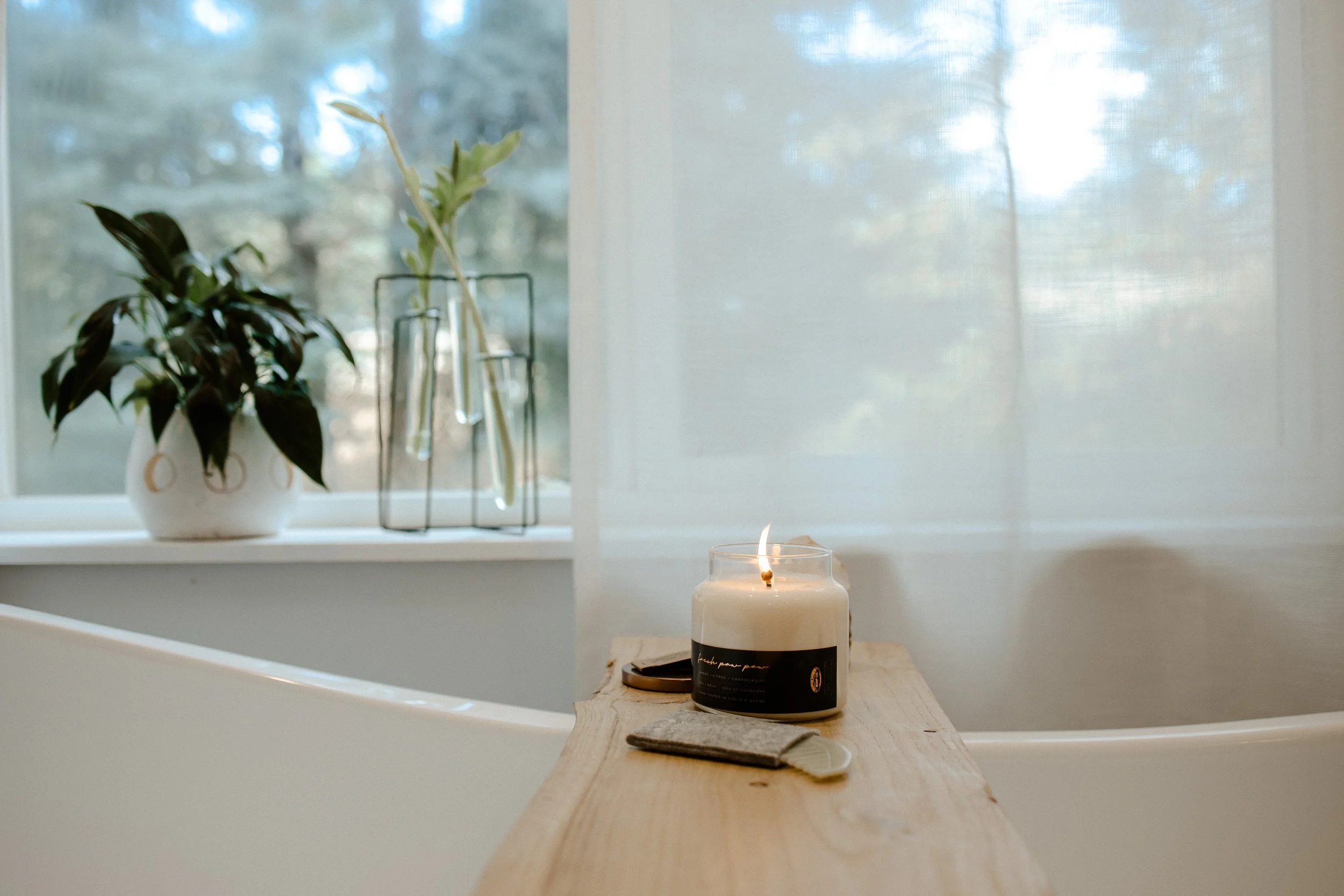
Above image by photographer + Visual Artist Amy Lynn.
Anxiety (Tools to Help Quiet Your Mind)

I’m going to let you in on a little secret that could really change the way you cope & experience your anxiety.
If you suffer from chronic anxiety, I don’t need to tell you how much suffering it brings to your life. It truly can remove the light from your life and make you feel utterly hopeless with its fear based “worried” voice.
One thing that anxiety can do is push us toward a very busy, fast, worried and panicked state. It speeds up our nervous system and brings us completely out of the present moment. When we’re caught up in our anxious thoughts, we tend to seek relief through distraction. We distract ourselves in order to keep the busyness going so we can ignore and avoid the discomforting thoughts that our anxious mind creates.
We run away from the worrisome thoughts by going really fast externally. This will manifest as over scheduling, chronic planning, too much drinking, eating, Netflix, work, exercising, chocolate, couch lounging, etc. Watch for your “go-to” coping mechanism of “over doing” and there reveals your avoidance mechanism.
Take in this statement and see if you can connect with it:
Although anxiety tells you that you “should” do more to fix or figure out a given situation or future predicament, the truth is that you need to do the opposite. What we so often need to do is to stop. Get more still. Be with the anxiety so we can work through it vs. run from it with more doing.
Anxiety will get more fuel with more material to fixate on. More doing is more fuel. More thinking is more material to ruminate on. Questions such as: What should i do? How do I figure this out? Fuel the anxious mind.
Fear will come up within our anxiety with thoughts like: “If i don’t do anything nothing will happen.” Or, better yet, “Things will happen that I don’t want, so I have to do more to control this situation.” These are lies that our anxiety leads us to believe is true.
Have you ever witnessed anyone who let go of control over a situation or outcome? I mean really surrendered to their circumstance, however unfavorable, and decided that they have done all that they could do and truly let go?
Something pretty incredible happens for the person who authentically practices surrender. I don’t mean “false surrender,” which looks like, “Well, I let it go for a day and it didn’t work.” That’s not full surrender.
I’m talking, straight up surrender, which is patient and has no expectations. It looks more like this:
“I let this situation go. I surrender the timeline, the expectation of it ever happening and, with that, I trust that there’s a bigger dream, a bigger experience, person, place or thing that I believe will eventually come in.”
This is an example of deep surrender.
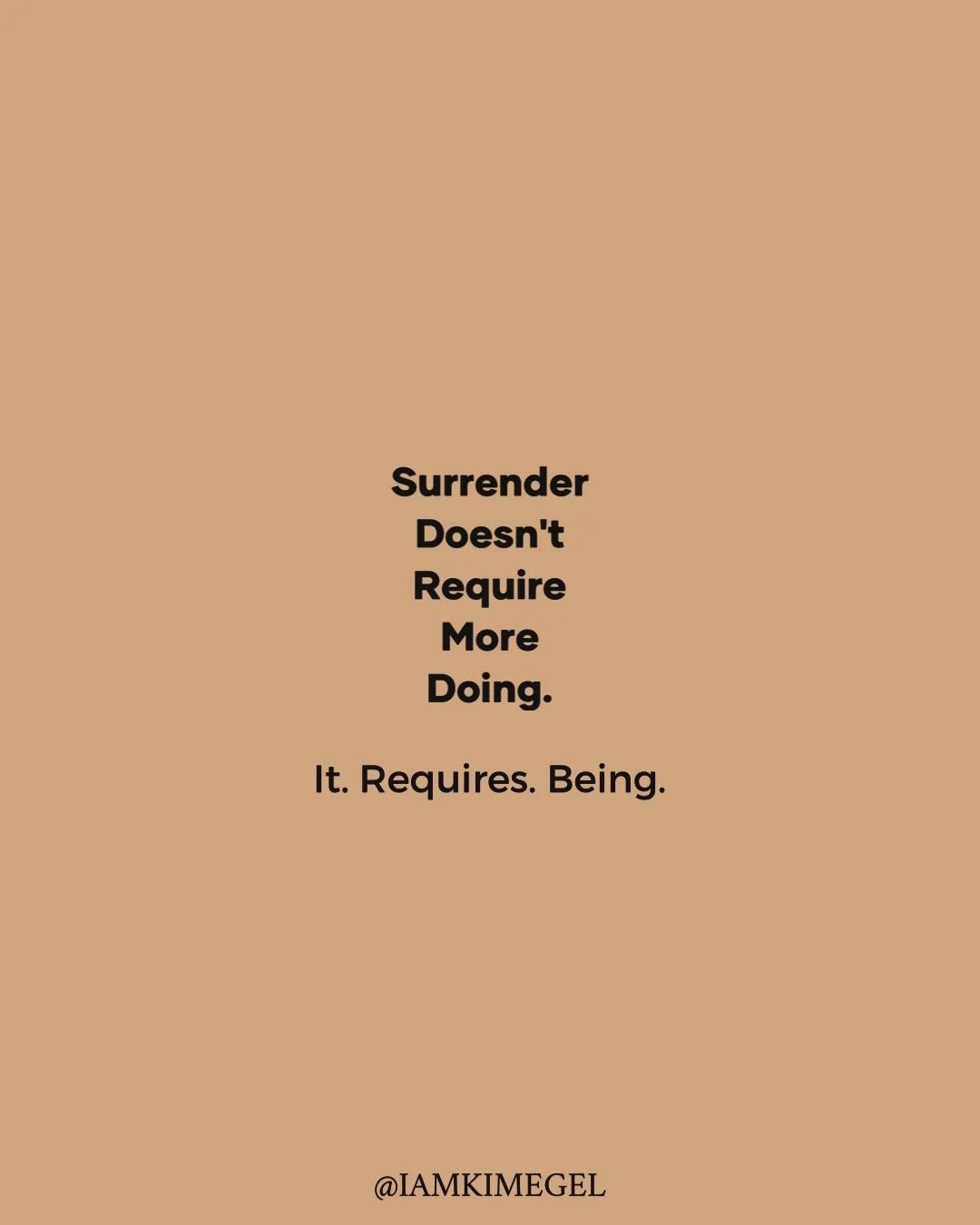
Thats what I’m offering you in this post. I’m offering you the gift of eliminating the merry go round of doing so much, but not really getting anywhere. Exhausting yourself but continuing to feel behind and not good enough.
I’m pointing you toward letting go & finding more peace and quiet. I’m suggesting for you to change the narrative of believing that you have to do more. I’m pointing you toward believing that your work in overcoming your anxiety is to find more stillness.
*Finding stillness is “your work.” I’m not suggesting “do nothing and everything will fall into place.” The work is in allowing anxious thoughts to come up and be there, so they can be processed and loose their charge over you.
Q: How do I get more still? How do I quiet my mind? It’s going 1000 miles per hour and I can’t make it stop.
I hear you and stick with me on this, no matter how resistant you might be to the following words:
It’s an inward job to beat anxiety and become more still and present in your life. Nothing externally is going to get to the route of quieting your anxious mind until you build a consistent self practices to quiet it.
practices to quiet can/may include:
meditation
breath work
check in with the quality and substance of your personal relationships
regular exercise
being in nature
healthy eating
healthy amount of sleep
make plans and schedule based on your desired lifestyle balance
reprioritize your time & energy
limiting/eliminating alcohol/ caffeine
introspective journaling questions to help increase awareness around your anxiety
what are your main priorities?
who & what adds value to your life and fills you up? (activities, hobbies, past times)
What takes from you and leaves you feeling drained?
When do you notice that your anxiety is the loudest? (What situations, people or places trigger more anxiety for you)
Anxiety is an emotion that can be managed. You can live a life with less anxiety as you weed through and eliminate things that keep it alive. There’s a life beyond constant mind chatter and distracting inner background noise. There’s a future that’s more peaceful. As you begin to believe this to be true, you will naturally start going toward the actions and ways of living that cultivate a more peaceful inner world. Over time with your effort, your inner world will align with your outer and you will, ultimately, feel more peaceful collectively. Trust.
Peace & love. Kim
*Above image was shot by Photographer, Ashley Williams @villapalomajoshuatree.
11 Ways to Be There For A Partner Struggling With Their Mental Health

It’s so important to have awareness and information around how to cope with a partner struggling with their mental health. I collaborated with wellness site MINDBODYGREEN on this post that offers 11 tips on how to support a partner that’s not in the best emotional and mental headspace.
Read the full post HERE.
*Image by photographer and creator of honeyandgarden, Renata Amazonas.